

Preface
Collagen supplement ODM allows brands to develop private-label collagen powders, drinks, capsules, tablets, gummies, and functional beauty products with support from an experienced manufacturer.
A complete ODM project may include product positioning, ingredient selection, formula design, flavor development, sampling, stability evaluation, packaging, labeling, testing, mass production, and export documentation.
Contents
1. What Is Collagen Supplement ODM?
ODM means that the manufacturer supports both product development and manufacturing. The brand may begin with only a concept, target market, price range, or desired product format.
OEM is more suitable when the brand already owns a mature formula and specifications. ODM is better for companies that need formulation, sampling, flavor adjustment, packaging advice, and launch support.
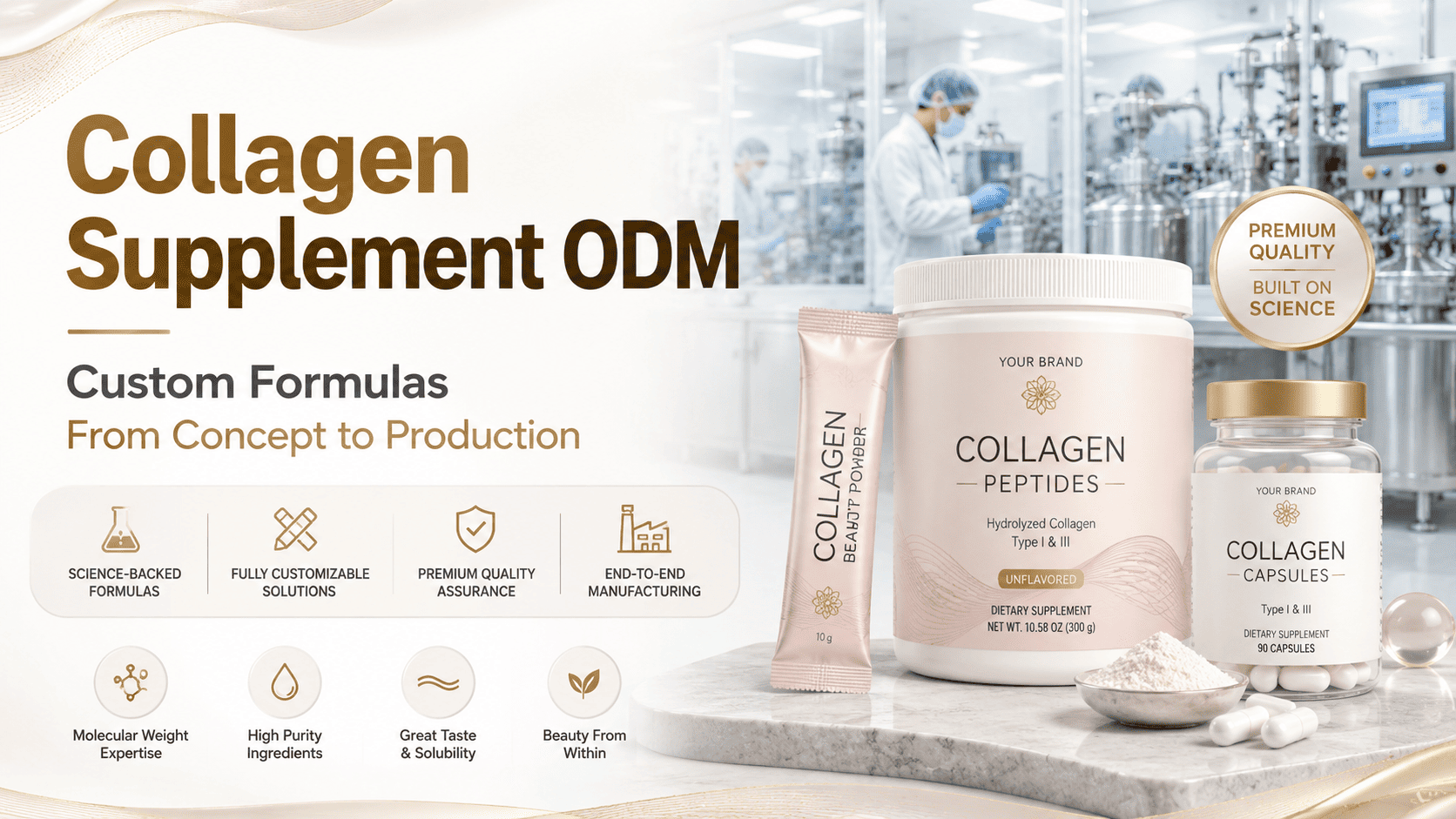
2. Product Formats
Common collagen formats include powder sachets, jars, ready-to-drink liquids, capsules, tablets, gummies, and beauty drink concentrates.
Powders offer flexible serving sizes and flavor development, while capsules are convenient for consumers who prefer simple daily supplementation.
3. Formula Development
collagen supplement ODM The development team should confirm collagen source, molecular weight, serving size, flavor, sweetness, solubility, color, target claims, and supporting ingredients.
Common supporting ingredients include vitamin C, hyaluronic acid, ceramides, elastin, glutathione, fruit extracts, minerals, probiotics, and other beauty-related nutrients.
Adding more ingredients does not automatically create a better formula. Each ingredient should have a clear purpose, suitable dosage, and compatibility with the final product.
4. Packaging and Compliance
| Area | Key Considerations |
|---|---|
| Packaging | Barrier properties, moisture protection, serving size and convenience |
| Labeling | Ingredients, nutrition facts, allergen statements and directions |
| Testing | Microbiology, heavy metals, stability and market-specific requirements |
5. ODM Development Process
A typical process includes consultation, product brief, ingredient review, formula proposal, sampling, flavor adjustment, packaging selection, testing, label review, pilot production, mass production, and final delivery.
Brands should reserve enough time for sample revisions, raw material sourcing, packaging printing, testing, and regulatory review.
6. Cost Factors
Costs are affected by formula complexity, collagen source, dosage, supporting ingredients, flavor system, packaging, minimum order quantity, testing, printing, and export documentation.
A lower MOQ reduces inventory risk but usually increases unit cost. New brands should balance launch quantity with realistic sales forecasts.
7. How to Choose a Manufacturer
Review manufacturing certifications, product development experience, quality systems, testing support, packaging capability, regulatory knowledge, communication, lead time, and reordering stability.
A suitable ODM partner should provide clear specifications and realistic recommendations instead of simply adding every trending ingredient into one formula.
Conclusion
Successful collagen supplement ODM requires clear product positioning, balanced formulation, compliant labeling, stable manufacturing, and practical launch planning.
FAQ
What is the difference between OEM and ODM?
OEM follows an existing formula, while ODM includes product and formula development support.
Can a startup develop a collagen supplement?
Yes. Startups can begin with one core product and a manageable minimum order quantity.
How long does ODM development take?
Timing depends on formulation, sampling, packaging, testing, printing, and regulatory requirements.
 立即聯絡
立即聯絡 加入好友
加入好友